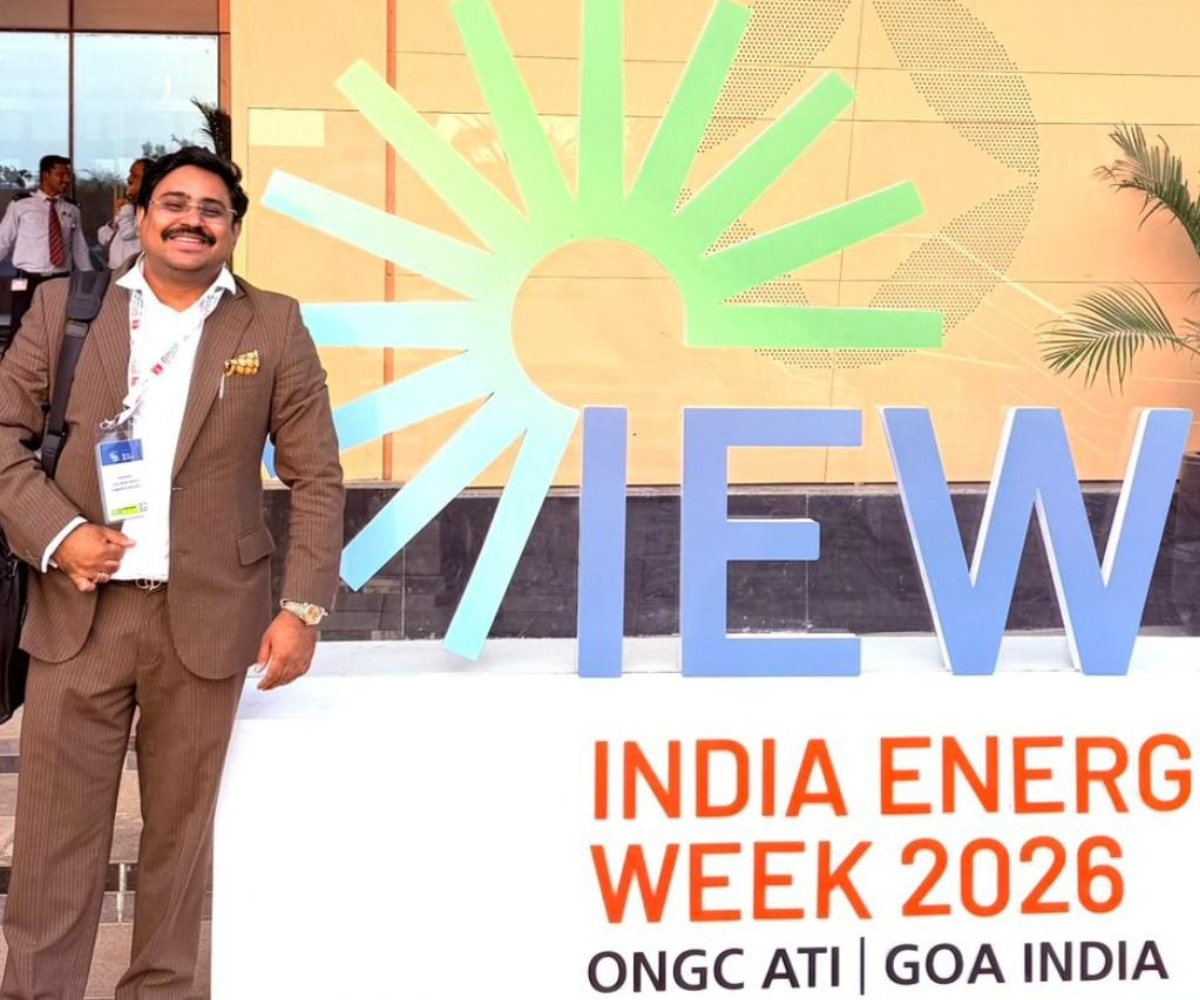
India’s ambitious journey toward energy security and sustainability took center stage at India Energy Week 2026, held in Goa from January 27 to 30. The event brought together an influential mix of policymakers, regulators, global energy corporations, public sector undertakings, private developers, and international investors. While technology and capital have long dominated discussions around energy transition, this year’s conversations underscored a less visible but equally critical pillar—legal infrastructure.
Among the prominent voices at the conference was Kartik Seth, Managing Partner of Chambers of Kartik Seth and Advocate-on-Record at the Supreme Court of India. As a strategic speaker, Seth provided a nuanced perspective on how legal frameworks are shaping—and often constraining—India’s energy ambitions.
Unlike traditional energy conferences that focus on technological innovation and market trends, India Energy Week has positioned itself as a policy-driven platform. It attempts to harmonize diverse and sometimes competing interests—from fossil fuel stakeholders to renewable energy advocates—under a unified vision for India’s energy future.
The 2026 edition reinforced this positioning by facilitating discussions not just on infrastructure and investment, but also on governance, regulation, and dispute resolution. The presence of senior government officials, including Hardeep Singh Puri, highlighted the event’s strategic importance in shaping national energy policy.
A key takeaway from Seth’s address was the indispensable role of legal systems in translating policy into practice. “Policy announcements and capital allocation are starting points, not solutions,” he emphasized. According to him, without well-defined contracts, predictable regulations, and efficient dispute resolution mechanisms, even the most ambitious energy projects risk delays or failure.
Energy projects, by their nature, involve long gestation periods, complex stakeholder arrangements, and significant capital commitments. In such an environment, legal clarity is not merely supportive—it is foundational. Contracts must anticipate risks, regulatory frameworks must ensure consistency, and enforcement mechanisms must inspire confidence among investors.
Despite significant progress in India’s energy sector, certain disputes continue to impede growth. Seth identified three recurring areas of conflict: tariff design disagreements, interpretation of power purchase agreements (PPAs), and jurisdictional conflicts between transmission and distribution entities.
These disputes often require specialized technical understanding, making arbitration the preferred method of resolution. However, arbitration itself is not without challenges. High costs, extended timelines, and the absence of binding precedents can create further uncertainty. Smaller developers, in particular, may find themselves at a disadvantage due to the financial burden of arbitration proceedings.
Arbitration has emerged as the dominant dispute resolution mechanism in the energy sector due to its flexibility and the ability to appoint subject-matter experts as arbitrators. It also offers confidentiality, which is often crucial in high-stakes commercial disputes.
However, Seth pointed out structural limitations that need urgent attention. The lack of precedent in arbitration leads to inconsistent outcomes, while enforcement—especially against government entities—remains a challenge. These issues not only delay project timelines but also erode investor confidence.
To address these concerns, there is a growing need for reforms that streamline arbitration processes, reduce costs, and improve enforcement mechanisms. Strengthening institutional arbitration frameworks could play a pivotal role in achieving these objectives.
Investment in the energy sector is inherently risk-sensitive. Investors evaluate opportunities based on risk-adjusted returns, and legal uncertainty significantly increases perceived risk. Seth highlighted that transparent tariff mechanisms, standardized contracts, and consistent regulatory decisions can dramatically lower these risks.
When investors are assured of timely enforcement of arbitration awards and predictable regulatory outcomes, capital flows more freely. This not only accelerates project execution but also reduces the overall cost of financing. Conversely, regulatory unpredictability and delayed dispute resolution can deter investment, pushing capital toward more stable markets.
As India diversifies its energy mix, new domains are emerging that require specialized legal expertise. These include deepwater oil exploration, green hydrogen technologies, offshore wind projects, and nuclear energy. Each of these sectors presents unique legal challenges—from intellectual property issues to safety and liability concerns.
Additionally, the integration of advanced technologies such as artificial intelligence and blockchain into energy systems is creating new contractual and regulatory complexities. Lawyers must adapt quickly, developing expertise that goes beyond traditional energy law to address these evolving challenges.
Seth emphasized that the role of lawyers in the energy sector must evolve from transactional support to strategic advisory. This involves engaging with policymakers, contributing to regulatory frameworks, and proactively identifying risks before they materialize into disputes.
Lawyers are increasingly expected to play a role in shaping contracts that prevent disputes rather than merely resolving them. This shift requires a deep understanding of both legal principles and the technical aspects of energy projects.
At a broader level, India’s energy security is closely tied to the strength of its legal systems. Robust contracts, accessible arbitration mechanisms, and expertise in international dispute resolution are essential for ensuring a stable and secure energy supply.
As India seeks to position itself as a global energy leader, the importance of legal clarity cannot be overstated. Efficient dispute resolution and consistent regulatory practices will determine not only the success of individual projects but also the country’s ability to attract long-term investment.
India Energy Week 2026 has reinforced a critical insight: the future of energy is not just about technology or capital—it is equally about law. As the country navigates the complexities of energy transition, legal frameworks will serve as the scaffolding that supports sustainable growth.
The discussions led by experts like Kartik Seth highlight the need for a holistic approach, where legal, regulatory, and commercial considerations are integrated into a cohesive strategy. In the coming decade, India’s ability to achieve energy security and leadership will depend as much on its legal architecture as on its technological and financial capabilities.
Stay updated with the latest legal news, tips, and Justiq announcements.

Chambers of Kartik Seth — Supreme Court Registered Firm. Practising before the Supreme Court, Delhi High Court, and High Courts across India for nearly fifteen years.
Copyright © Chambers of Kartik Seth. Powered By Readycoder Ventures Pvt. Ltd.
The Bar Council of India prohibits advocates from engaging in any form of advertisement or solicitation. By accessing the Chambers of Kartik Seth website (our website), the user acknowledges that:
Agree and Enter Decline