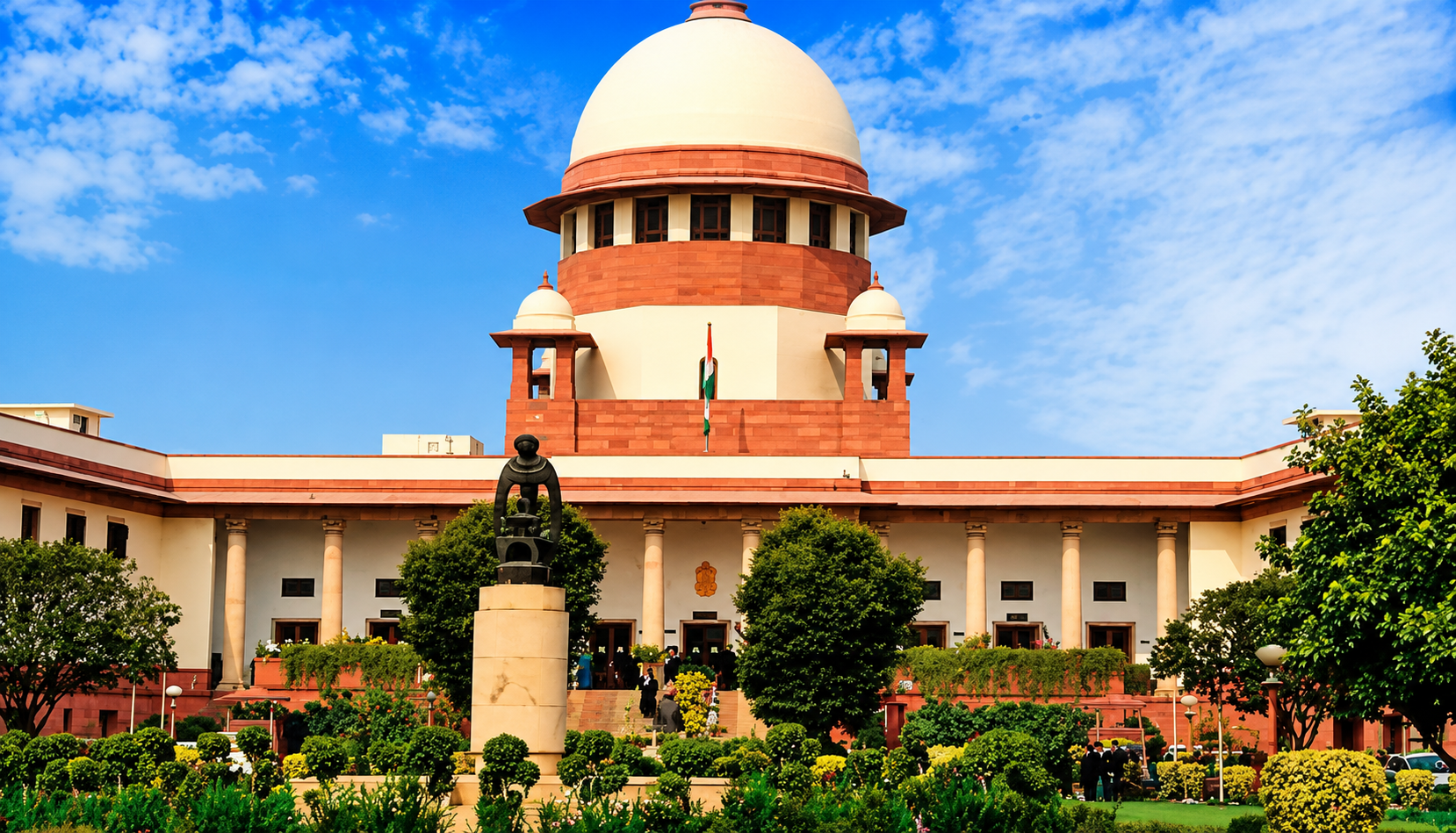
Kartik Seth Represents the Rajasthan High Court Before the Supreme Court | Landmark Ruling on Merit-Based Selection and Open Vacancy Allocation
There are moments in a lawyer’s career that carry a weight beyond the ordinary — and for Advocate Kartik Seth, representing the Rajasthan High Court itself before the Supreme Court of India in a matter of significant constitutional and service law importance was precisely one of them. In his own words, it was “genuinely an honour” — and the judgment that emerged from these proceedings is one that will shape recruitment jurisprudence across institutions in India for years to come.
The Legal Question That Needed Settling
At the heart of this matter lay a long-standing interpretational debate in service jurisprudence — one that has generated inconsistency and uncertainty in recruitment processes across public institutions for years. The question: when a candidate belonging to a reserved category secures selection purely on merit, without availing any relaxation of any kind, should that candidate be counted against open vacancies or against the reserved category quota? It is a question that sounds technical but carries profound implications for fairness, transparency, and the integrity of merit-based public recruitment.
The Supreme Court’s Decision
The Supreme Court settled this question definitively. The Court clarified that candidates who secure selection on merit without any relaxation are to be considered against open vacancies — irrespective of their category. This ruling brings much-needed consistency to a principle that had been applied unevenly across different recruitment processes and institutions. It affirms that merit is merit, and that a candidate who competes and succeeds on the same terms as any other open category candidate must be treated accordingly — counted against open vacancies and not displaced into reserved category slots merely on account of their background.
Kartik Seth’s Role and Reflection
Appearing as counsel for the Rajasthan High Court — the institution itself — in proceedings of this constitutional significance before the Supreme Court is a responsibility that few advocates are entrusted with. Kartik Seth’s selection for this role speaks to the confidence and trust that the Rajasthan High Court placed in his ability to present a matter of this importance at the apex judicial level. As he himself reflected, being part of a judgment of this magnitude — one that settles a significant point of service law and ensures consistency and transparency in recruitment across institutions — was a rare privilege and a moment of deep professional fulfilment.