
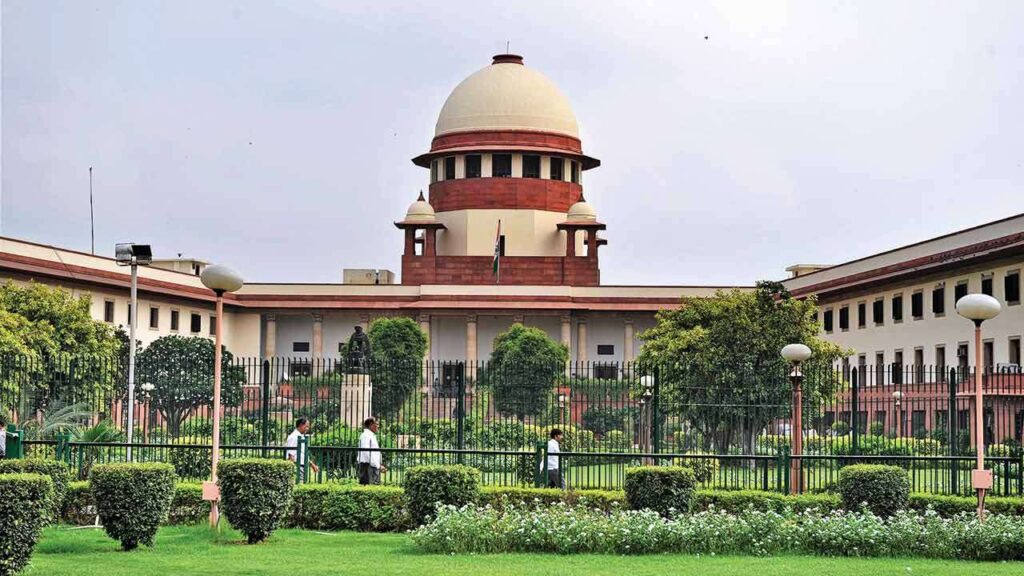
Why the Supreme Court Replaced Former Judge Arun Mishra in the Adani-Rajasthan Power Arbitration
The Supreme Court’s recent decision to replace former apex court judge Justice Arun Mishra as an arbitrator in a dispute involving Adani-linked Parsa Kente Collieries Ltd. (PKCL) and Rajasthan Rajya Vidyut Utpadan Nigam Ltd. (RRVUNL) has brought renewed attention to an important question in arbitration law: when can an arbitrator be replaced because of an earlier judicial involvement in a related dispute?
On 3 August 2026, the Supreme Court replaced Justice Arun Mishra with former Supreme Court judge Justice S.K. Kaul in the ongoing arbitration between PKCL and RRVUNL. RRVUNL had sought the change on the ground that Justice Mishra had previously dealt with a dispute involving the same parties in 2019. The connection between the two proceedings is therefore central to understanding the Court’s decision.
The Parties and the Underlying Agreement
PKCL is an Adani-linked joint venture associated with Adani Enterprises Ltd. and RRVUNL. The two entities are connected through a long-term agreement concerning the development, mining and transportation of coal.
The joint venture was formed in 2007. Under the arrangement, Adani Enterprises holds a 74 percent stake, while RRVUNL holds the remaining 26 percent. The agreement created a long-term commercial relationship involving coal mining and its delivery for power generation.
As often happens in large infrastructure and energy contracts, disagreements eventually arose over contractual obligations and financial calculations. These disagreements led the parties into arbitration and subsequently into litigation before the courts.
What Happened in the 2019 Dispute?
The background to the present controversy goes back to a dispute that reached the Supreme Court in 2019.
The earlier case concerned several financial and contractual issues arising out of the Coal Mining and Delivery Agreement. Among the major questions were price adjustment or escalation, fixed costs, amounts lying in an escrow account and the cost of constructing a railway siding.
An arbitrator had awarded PKCL relief on some of these claims. The matter subsequently travelled through the judicial system and ultimately reached the Supreme Court.
On 27 May 2019, a bench comprising Justice Arun Mishra and Justice M.R. Shah considered the dispute. The Court partly allowed PKCL’s appeal. In particular, it restored the arbitral award relating to price adjustment or escalation while upholding the setting aside of awards relating to fixed costs and the escrow account.
One significant issue concerned the date from which price escalation was to be calculated. The original commencement date had been extended because of delays in obtaining forest and environmental clearances. The arbitrator had interpreted the contractual provisions in favour of PKCL’s claim for price escalation.
The Supreme Court held that the arbitrator’s interpretation was a possible and plausible interpretation of the agreement. It therefore concluded that the High Court had exceeded the permissible scope of interference with the arbitral award on that issue.
At the same time, the Supreme Court did not accept every part of the arbitral award. With respect to fixed costs, for example, the Court found that the material on record did not sufficiently establish the claimed loss. The Court also upheld the High Court’s view concerning the escrow account.
Thus, the 2019 judgment became an important part of the legal history between PKCL and RRVUNL.
Why Did the 2019 Judgment Become Relevant Again?
The significance of the 2019 judgment is not limited to what the Supreme Court decided on price escalation and other contractual claims.
Justice Arun Mishra, who was part of the 2019 bench, was subsequently appointed as an arbitrator in a later dispute involving the same parties.
RRVUNL objected to his continuation as arbitrator and sought his replacement. Its argument was essentially that Justice Mishra had already adjudicated an earlier dispute involving PKCL and RRVUNL. According to the company, this previous judicial involvement raised concerns regarding the appearance of impartiality in the subsequent arbitration.
The issue, therefore, was not simply about whether Justice Mishra had acted improperly. Rather, it involved the broader principle that an arbitrator must be perceived as independent and impartial, particularly when the arbitration concerns parties and contractual relationships that have already featured before the arbitrator in another capacity.
The Supreme Court ultimately accepted the request to replace Justice Mishra and appointed former Supreme Court judge Justice S.K. Kaul instead.
The Importance of Impartiality in Arbitration
Arbitration is designed to provide parties with a neutral forum for resolving commercial disputes outside the traditional court process. For arbitration to maintain credibility, however, the arbitrator must not only be impartial but must also inspire confidence in the parties.
This is particularly important in complex commercial disputes involving substantial financial interests, infrastructure projects and government-linked entities.
The principle of independence is not merely about proving actual bias. Questions may also arise where circumstances could reasonably create doubts about an arbitrator’s neutrality.
That distinction is important in understanding the present controversy. The Supreme Court’s decision to substitute Justice Mishra does not, by itself, amount to a finding that he was actually biased or that his earlier judgment was improperly decided. Instead, the development demonstrates how concerns surrounding an arbitrator’s previous involvement can become relevant to the constitution of an arbitral tribunal.
The 2019 Listing Controversy
The 2019 dispute also attracted attention for another reason.
The case was listed before the Supreme Court during the summer vacation, and its listing out of turn became a subject of public discussion. Senior advocate Dushyant Dave wrote an open letter to the then Chief Justice of India, Ranjan Gogoi, raising concerns about the listing of two Adani-linked matters before a bench headed by Justice Arun Mishra. The PKCL-RRVUNL dispute was one of the cases mentioned in that controversy.
This historical context explains why the identity of the arbitrator in the present proceedings has attracted attention beyond the immediate contractual dispute.
The latest decision therefore connects three separate issues: the commercial relationship between PKCL and RRVUNL, the Supreme Court’s 2019 judgment, and the principles governing neutrality and confidence in arbitration.
What Does the Decision Mean for Arbitration?
The development carries broader lessons for commercial arbitration in India.
First, arbitrator selection is fundamental to the legitimacy of the process. Parties must have confidence that the person deciding their dispute approaches the matter independently.
Second, previous involvement with the same parties can become relevant even where the earlier proceeding was judicial rather than arbitral. The circumstances of each case would need to be examined carefully, but the present development shows that an arbitrator’s prior role can become a legitimate subject of scrutiny.
Third, the decision highlights the importance of maintaining a clear distinction between judicial adjudication and subsequent arbitral decision-making. A judge may decide a dispute according to the law and evidence before the court, but a later appointment involving the same parties can raise questions about whether the parties perceive the arbitrator as sufficiently independent.
Finally, the case demonstrates that arbitration is not completely insulated from judicial oversight. Courts may intervene where issues concerning the constitution or impartiality of an arbitral tribunal arise.
Conclusion
The Supreme Court’s decision to replace Justice Arun Mishra with Justice S.K. Kaul in the PKCL-RRVUNL arbitration is significant because the issue goes beyond the immediate dispute between an Adani-linked company and a Rajasthan power utility.
At its heart lies the principle of confidence in the arbitral process.
The earlier 2019 dispute had already placed PKCL and RRVUNL before the Supreme Court, with Justice Arun Mishra being part of the bench that decided important contractual questions between them. Years later, when Justice Mishra became associated with a subsequent arbitration involving the same parties, RRVUNL questioned whether that prior judicial role should prevent him from continuing as arbitrator.
The Supreme Court’s decision to appoint Justice S.K. Kaul instead underscores the importance of ensuring that arbitration remains not only legally sound but also visibly neutral.
For India’s growing arbitration framework, the episode serves as a reminder that the credibility of dispute resolution depends not merely on the final decision, but also on the independence and perceived impartiality of the person making it.