GAIL Executive Trainee Case: Delhi High Court Upholds Disclosure Norms
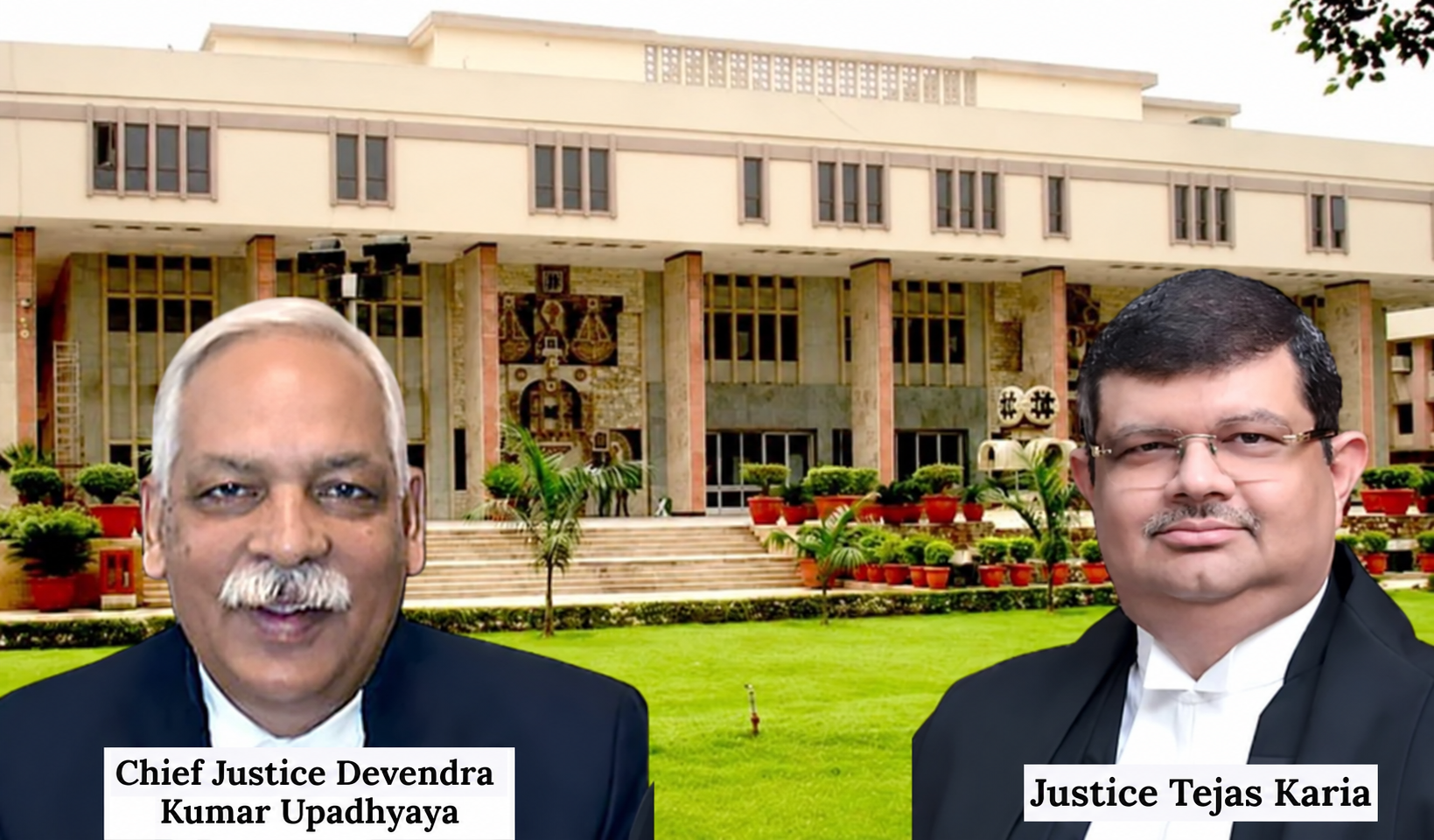
In an intra-court appeal before the Delhi High Court, a Division Bench comprising Chief Justice Devendra Kumar Upadhyaya and Justice Tejas Karia examined a challenge arising from GAIL’s decision to disengage a candidate selected for the post of Executive Trainee (Mechanical). The appellant, a person with 100% hearing impairment who had qualified through GATE 2026, had denied the pendency of any criminal case in his online application form. However, at a later stage — after receiving his offer of appointment — he disclosed, through an attestation form and affidavit, that a First Information Report was in fact pending against him arising out of an ancestral family land dispute.
The Legal Issue Before the Court
The central question was whether the appellant’s negative declaration in the application form amounted to genuine suppression, or whether the question itself was too vague to hold him accountable — and whether GAIL’s decision to withhold his training participation, pending verification, was arbitrary or illegal. The appellant argued that structural limitations in the application form had led to an unintended omission, while GAIL maintained that the declaration was clear and unambiguous.
Kartik Seth’s Role in Representing GAIL
Advocate Kartik Seth appeared as part of the legal team representing GAIL in this matter, alongside senior and other counsel appearing for the Respondents. Representing the organisation’s interests, the team’s arguments centred on the position that the legality of GAIL’s action had to be tested against the declaration made at the threshold stage of the application — not against disclosures volunteered only after the appointment offer had already been issued. This line of reasoning proved central to the outcome, as it directly shaped the Court’s final view on the matter.
The Court’s Ruling
The Division Bench agreed with this position and dismissed the appeal, affirming that a later disclosure cannot cure an incorrect declaration made at the threshold — a principle that GAIL’s counsel, including Kartik Seth, had successfully argued for. At the same time, the Court balanced institutional integrity with individual fairness: it directed that the disengagement communication issued to the appellant would not be construed as a “termination” and would not carry any accompanying stigma, while also preserving his right to apply afresh in future recruitment cycles, subject to full and honest disclosure.
Significance of the Judgment
This ruling offers PSUs and public-sector recruiters long-term clarity on enforcing truthful disclosure obligations from candidates, while ensuring recruitment decisions remain fair, defensible, and free from arbitrariness. Kartik Seth’s involvement in this matter, as part of GAIL’s representing counsel, reflects his continuing engagement in service law and public-sector litigation — areas that demand a strong grasp of administrative law, constitutional remedies under Article 226, and the practical realities of institutional recruitment processes.